Your First Full Day at the Field: A Gear and Preparation Checklist: The Details That Matter Most
A first full day at an airsoft or paintball field can go wrong before the first game: a fogging lens, dead battery, missing water, or equipment that was never tested outside the house. Good preparation is less about carrying every accessory than preventing small problems that distract from safe, enjoyable play. This checklist covers protection, field rules, basic maintenance, and habits that make a new player welcome.
Confirm the field's requirements before packing
Start with the field's current rules, not a kit list copied from a friend. Requirements may differ for eye protection, clothing, equipment types, paint or BB limits, safe zones, chronograph procedures, and footwear. Read the venue's information and contact organisers if anything is unclear. Check current official guidance where it applies to equipment, transport, storage, or age restrictions.
Ask what happens when a game stops. Most fields have a designated safe area where magazines are removed, markers are unloaded or made safe, and eye protection may be removed only after staff give permission. Learn the field's signals and boundaries during the briefing. A minor rule in the car park can become a safety issue once groups are moving around the site.
If you are borrowing or renting equipment, confirm what is included. You may still need suitable clothing, closed footwear, gloves, water, or a way to carry personal items. Do not assume a rental mask, battery, charger, or magazine arrangement will match your own equipment.
Make eye protection the non-negotiable item
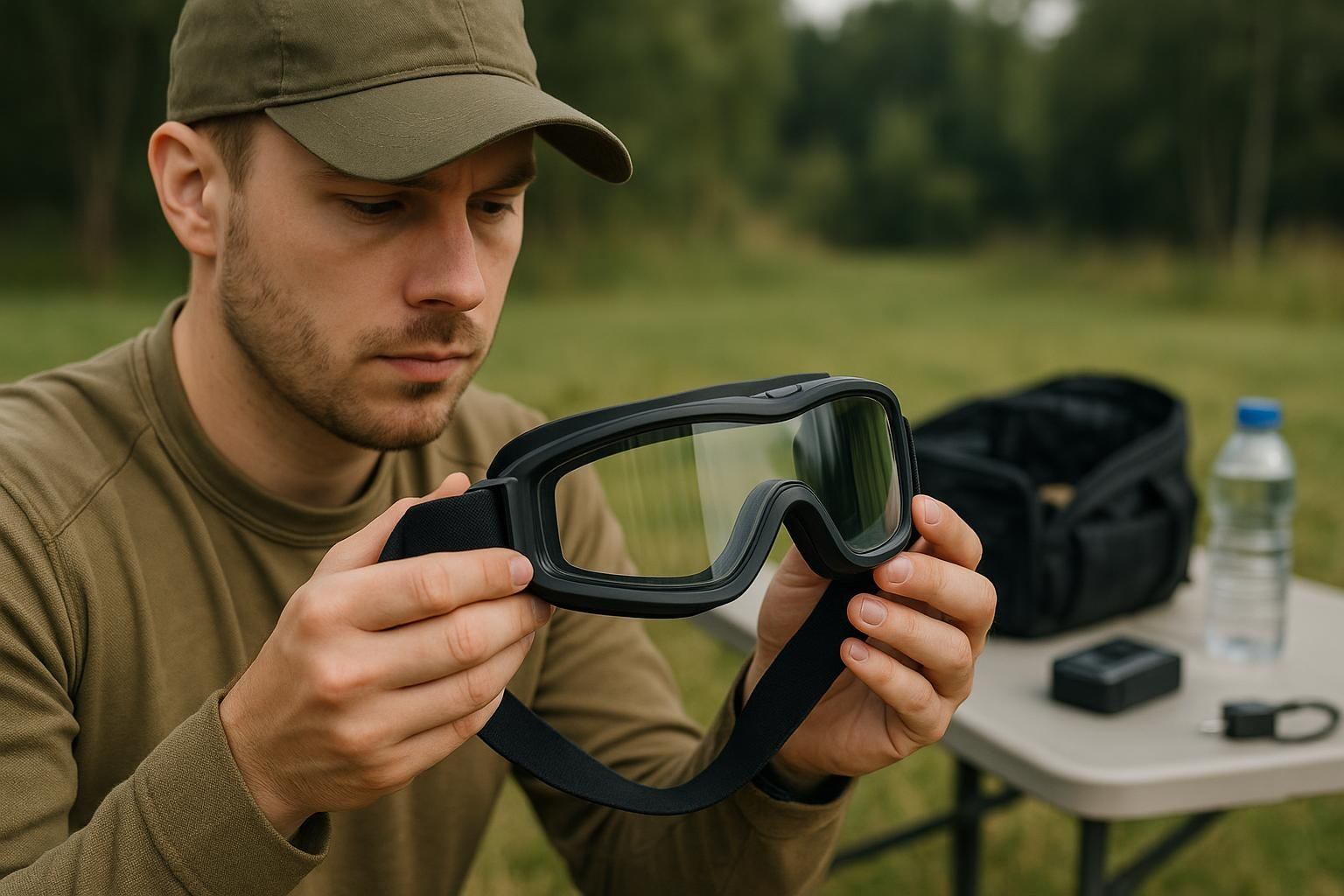
For airsoft, use field-approved, full-seal eye protection designed and rated by its manufacturer for the relevant impact risk. Ordinary safety glasses, workshop goggles with gaps, sunglasses, and unapproved mesh products are poor substitutes. Even a small opening around the edge can make otherwise good-looking eyewear unsuitable.
Paintball normally requires an approved mask covering the eyes, face, and ears as required by the field. Do not remove its lens or alter the mask to improve airflow. Check for cracks, deep scratches, clouding, or a loose fit, and ensure the retention system stays secure when you bend, run, or look down.
Fogging is never a reason to lift protection during a live game. Use only products and methods approved for that lens or mask. If visibility becomes unsafe, call yourself out, follow the field's procedure, and ask staff for help in a safe area. Carry a spare lens only if the manufacturer and field permit replacement and you know how to fit it correctly.
Prepare a small, reliable loadout
Choose clothing that lets you kneel, crawl, or cross uneven ground without exposing skin unnecessarily. Closed, supportive footwear with usable tread matters more than a collection of pouches. Gloves can protect your hands from rough surfaces but should not interfere with safe equipment handling.
Use this checklist before leaving home:
– Field confirmation, directions, registration details, and weather-appropriate clothing
– Approved eye or face protection, plus a compatible spare if you already own one
– Water, food, required medication, and a small rubbish bag
– Charged batteries or a full air system, with the correct charger or fill plan
– Magazines, loader or pods, field-approved paint or BBs, and a basic tool kit
– Towel, lens-safe cleaning supplies, tape, and a change of dry clothing
– Identification and any documents the venue requests
Keep the list practical. Extra equipment creates more opportunities to lose, snag, or troubleshoot something. If you are unsure whether an item is allowed, ask before bringing it into the playing area.
Do a calm equipment check the day before
For airsoft, check that magazines feed properly, controls move as intended, stocks and grips are secure, and nothing rattles because a screw has backed out. Inspect wiring and connectors for damage, and charge batteries with the correct charger in a suitable location. Never leave charging equipment unattended or use damaged batteries.
For paintball equipment, check the marker, loader, air connection, tank condition, mask, and seals according to the manufacturer's instructions. Look for leaks, damaged O-rings, cracked hoses, or regulator problems. If you find a fault, stop and ask a qualified technician or field staff; do not improvise a pressure-system repair.
Clean lenses using the method recommended for the lens material. Wipe dirt from equipment before packing it, and keep BBs or paint away from grit, moisture, and loose debris. Avoid modifications intended to increase power or bypass field limits. They can create safety, reliability, or legal problems and may make equipment ineligible for play.
Learn the field culture as well as the rules
The briefing should explain where play begins, where eliminated players go, how hits are called, and what to do with a suspected equipment fault. Listen even if you have played elsewhere: rules are not universal, and staff directions take priority during an event.
Call your hits clearly and promptly. If you are unsure whether a shot connected, follow the local rule rather than arguing. Keep equipment pointed in a safe direction, respect minimum engagement procedures, and never fire at someone removing eye protection or standing in a designated safe area. Report apparent safety violations calmly to a marshal instead of escalating them.
Sportsmanship also means returning dropped equipment, acknowledging a fair call, avoiding prohibited blind firing, and giving newer players room to learn. Do not use a hit dispute to settle a personal score. The point is shared play under agreed conditions, not winning every disagreement.
Make the next game easier to prepare for
After the event, separate equipment that needs cleaning, drying, charging, or repair before storage. Empty paintball equipment as directed by the manufacturer and field; store airsoft replicas and batteries according to applicable local rules and the manufacturer's guidance. Write down what failed while the details are fresh: a fogging issue, uncomfortable strap, missing tool, or troublesome magazine.
That note turns one long day into a better routine. Reliable gear, clear rules, and considerate conduct will do more for your first airsoft or paintball day than a larger loadout ever will.